

CHAIM HERZOG WAS an Irish-born politician who served as the sixth president of Israel.
Before entering politics, he was a paramilitary, soldier, intelligence officer, lawyer and diplomat.
Born in Belfast in 1918, he moved to Dublin before the age of one after his father, Isaac Herzog, became Ireland’s first chief rabbi. Chaim’s son, also named Isaac Herzog, is the current president of Israel.
Herzog’s name has made headlines in Ireland, Israel and around the world in the last few days because a group of Dublin City councillors have proposed removing his name from a park in Rathgar.
The motion has been condemned by Israelis and members of the Jewish community in Ireland as antisemitic, while senior members of the Irish government – including the Taoiseach and Tánaiste – have also voiced strong opposition.
Herzog left Ireland for Palestine in 1935 and studied in Jerusalem, while it was part of the British Mandate of Palestine, and joined the Jewish paramilitary force Haganah.
Haganah was formed to protect the largely colonialist Jewish community in Palestine.
The group also fought an insurgency against the British, including by bombing ships that were used to deport Jewish colonialists who had entered Palestine illegally.
Herzog went on to join the British Army and fought in World War II, taking part in the liberation of concentration camps as a soldier and later serving in intelligence. During that time, he helped to secretly transport Jews from Europe to Palestine while their numbers were restricted by the British.
Herzog later played a central role in establishing the Israeli intelligence service, Aman, and served as the military attaché at the Israeli embassy in the United States, a role he held from 1950 to 1954.
Upon returning to the newly formed state of Israel, Herzog served in a number of high-ranking military positions, including running the intelligence agency. As head of Aman, he developed a connection with Savak, the intelligence service of Iranian monarchy.
After a spell as a businessman, Herzog was recalled to military service at the time of the Arab-Israeli War of 1967. He became governor of the occupied West Bank, a large portion of Palestine that Israel seized and illegally occupies to this day.
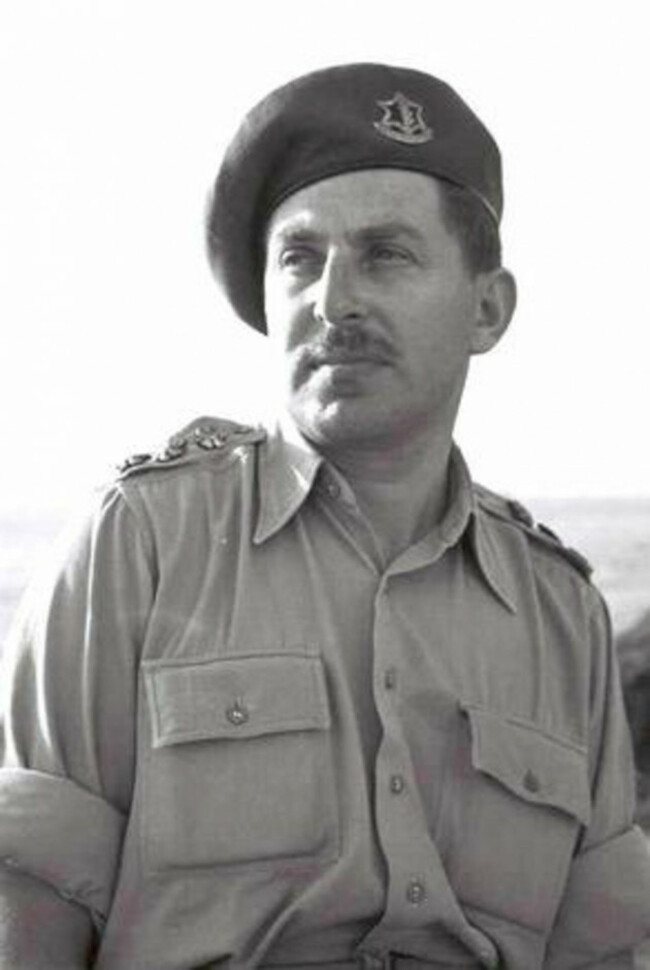
Chaim Herzog while serving as military attaché in the US in 1950. Alamy Stock Photo
Alamy Stock Photo
In the 1970s, Herzog worked as a lawyer and diplomat, serving as Israel’s ambassador to the UN, during which time he agreed to the establishment of the UNIFIL peacekeeping mission, which followed Israel’s 1978 invasion of southern Lebanon.
In 1981, he entered politics, winning election to the Israeli parliament as a member of the Labor party and in 1983, he was elected president.
As president, Herzog pardoned Shin Bet (internal intelligence) officers who executed Palestinian bus hijackers that had surrendered in 1984. He also commuted the murder sentences of a Jewish vigilante group.
During a state visit to Ireland in 1985, Herzog inaugurated the Irish Jewish Museum in Dublin and unveiled a memorial to former Irish president Cearbhall Ó Dálaigh, who was a childhood friend.
Herzog staunchly defended the ruthless suppression of the first Palestinian intifada (“uprising” in Arabic) against criticism from outside of Israel, arguing there was no alternative, and was reelected unopposed to a second term as president in 1988.
He wrote a number of books, mostly on Israeli military history and was a frequent commentator in the media when it came to the Israeli-Palestinian conflict.
He died after a long illness in 1997 in Tel Aviv.
Need more information on what is happening in Israel and Palestine? Check out our FactCheck Knowledge Bank for essential reads and guides to navigating the news online.