

THERE WERE RAISED eyebrows at today’s Cabinet meeting over a leaked memo on the Government’s plans to introduce restrictions on social media use for teenagers.
The Journal understands Taoiseach Micheál Martin brought up his frustrations over the Government’s ‘Digital & AI Strategy’ being leaked to the media ahead of its publication today.
It’s understood that the Taoiseach took issue with what he deemed to be a small part of the report (the social media age restrictions) being leaked and “misrepresented”.
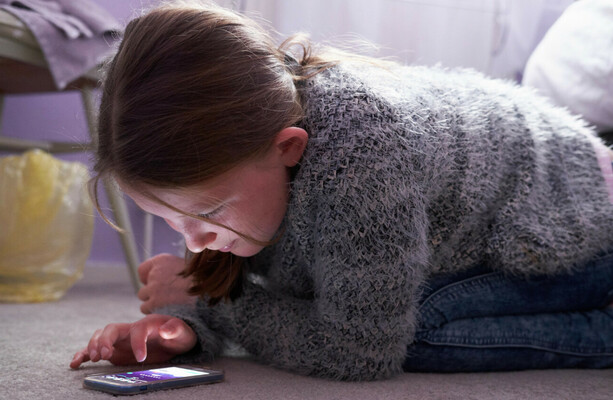
Among other things, the report commits to working with EU Member States to “explore options” to introduce age restrictions on the use of social media, particularly for those under the age of 16.
Sources have told The Journal that during the discussion, Minister for Media Patrick O’Donovan also expressed surprise when he saw reports this morning about the Government making way for a ban on social media for under 16s, as did Tánaiste Simon Harris.
This evening, Government spokespeople sought to provide clarity on what exactly it is that the Government is proposing and moved to quash reports of a disagreement between Fianna Fáil and Fine Gael in relation to social media use for teenagers.
There was widespread confusion today over what exactly is being proposed by the Government, with a Government spokesperson this evening maintaining that an outright ban is not currently on the cards.
However, the spokesperson said it is not yet decided what the “restrictions” will entail.
“What matters is the approach going forward,” a spokesperson for the Tánaiste said, adding that the Government’s focus is on how young people can be protected online.
The conversation at Cabinet this afternoon came after it was widely reported this morning that the Government plans to copy similar moves made by Australia and France in relation to social media use for teenagers.
The actual plan agreed this evening will see a pilot of an age-verification tool take place in the first half of this year, with young people involved in the trial to assess how it will work in practice.
In addition, the plan will look at keeping legislation under review to address the advent of AI and technologies as tools to intimidate or harass individuals.
There is also an expectation that the government will engage with the European Commission to ensure the list of prohibited practices under the EU’s AI legislation remains fit for purpose in the context of the growing capabilities of AI.
The Irish government will also support Coimisiún na Meán in leading an information and awareness campaign, to support public understanding on reporting harmful and illegal content, as well as the role of Coimisiún na Meán in relation to online safety.
Tánaiste Simon Harris said last week that the government was “clearly hearing” from parents that they want action when it comes to children on social media, after a poll showed that three-quarters of those surveyed were in favour of the restriction.
Unhappiness from campaigners
Elsewhere, The government’s plan has been criticised by the Children’s Rights Alliance, saying that it “punishes children for the fixable faults created by the tech giants by denying them the social engagement that is some of the best parts of social media”.
“It may be well-meaning but is banning under 16s from having social media accounts the answer? Undoubtedly, it’s attractive to adult decision makers,” said the group’s online safety coordinator Noeline Blackwell.
Blackwell added that it’s possible restrictions on social media may drive children to “socialise in secretive ways which predators use to groom children for sexual and financial abuse”, with the likelihood that these children may be less likely to report because they are doing something that has been banned by their government.
“A ban does not provide the clubs, the youth workers, the safe playgrounds, the links to their families and friends in the offline world that might nourish and support children,” Blackwell said.
Above all, it doesn’t address the problem. The problem is not children, or the fact that they’re socialising online. The problem is that the products aren’t safe enough.
The Children’s Rights Alliance has proposed that the government convene a wide debate on guardrails for younger children using social media, and that Ireland’s politicians work with new EU-wide legislation to require platforms to better regulate harmful material.
Meanwhile, Dublin MEP Barry Andrews said that he welcomed today’s move by the government.
“Social media urgently needs age limits. MEPs voted last year to support age verification and thankfully Ireland is now moving to implement the EU Digital Wallet solution, which must use the highest security and privacy standards,” the Fianna Fáil politician said.
The EU Digital Wallet facilitates proof of identity, including age verification for social media. MEPs passed the law in 2024 and Ireland is now implementing a prototype from the European Commission.
“Parents cannot wait any longer,” Andrews added on the measures to tighten social media use for young people.
With reporting from Eoghan Dalton