

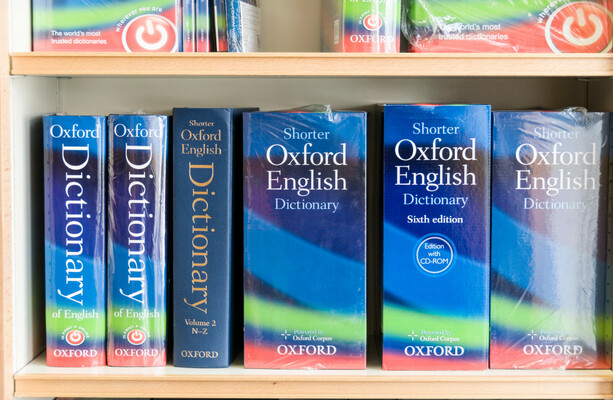
OXFORD UNIVERSITY PRESS, the maker of the Oxford English Dictionary, has announced its Word of the Year for 2025.
The publisher said it received more than 30,000 submissions of what the word should be and ultimately ‘rage bait’ was chosen.
The word, which is actually two words, is defined as online content deliberately designed to elicit anger or outrage by being frustrating, provocative, or offensive, typically posted in order to increase traffic to or engagement with a particular web page or social media account.
The Oxford Word of the Year can be a singular word or expression, which the publisher’s lexicographers think of as a single unit of meaning.
Rage bait is a compound of the words rage, meaning a violent outburst of anger, and bait, an attractive morsel of food.
Both terms are well-established in English and date back to Middle English times.
Although it is similar to the word clickbait, rage bait has a more specific focus on evoking anger, discord, and polarisation.
The use of the term rage bait has increased threefold in the last year, data shows.
Oxford University Press said: “With 2025’s news cycle dominated by social unrest, debates about the regulation of online content, and concerns over digital wellbeing, our experts noticed that the use of rage bait this year has evolved to signal a deeper shift in how we talk about attention – both how it is given and how it is sought after – engagement, and ethics online.”
The Oxford Word of the Year in 2024 was brain rot. It’s defined as the supposed deterioration of a person’s mental or intellectual state, especially viewed as the result of overconsumption of material (now particularly online content) considered to be trivial or unchallenging.
“Where last year’s choice, brain rot, captured the mental drain of endless scrolling, rage bait shines a light on the content purposefully engineered to spark outrage and drive clicks,” said President of Oxford Languages Casper Grathwohl.
Vibe coding
Last month, Collins Dictionary revealed its Word of the Year is ‘vibe coding’.
Vibe coding is when AI is used to try and turn natural language into computer code.
In a sign of how quickly these things have moved, it was only two years ago that AI was named as the 2023 Word of the Year.
Vibe coding as a term was popularised by Andrej Karpathy, former Director of AI at Tesla and founding engineer at OpenAI, to describe how AI enables creative output while he could “forget that the code even exists”.
“Basically, telling a machine what you want rather than painstakingly coding it yourself,” is now Collins explains it in this morning’s announcement.
Other words added to Collins’ Dictionary this year includes ‘biohacking’, which means altering the natural processes of one’s body in an attempt to improve health and longevity.
Another is ‘clanker’, a derogatory term for computers, robots, or sources of AI, which was popularised by Star Wars: The Clone Wars.
The word went viral on social media and is often used to express people’s frustrations with, and distrust of, AI chatbots and platforms.