

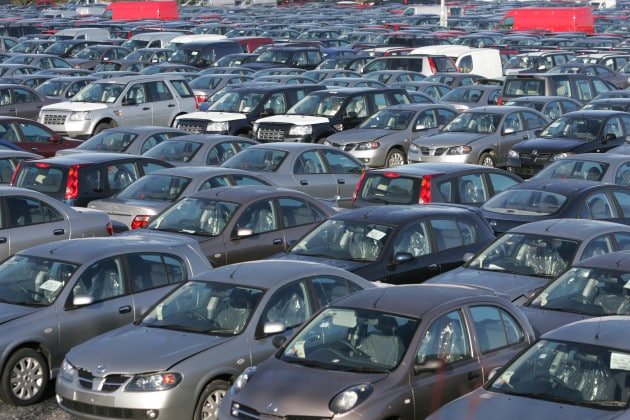
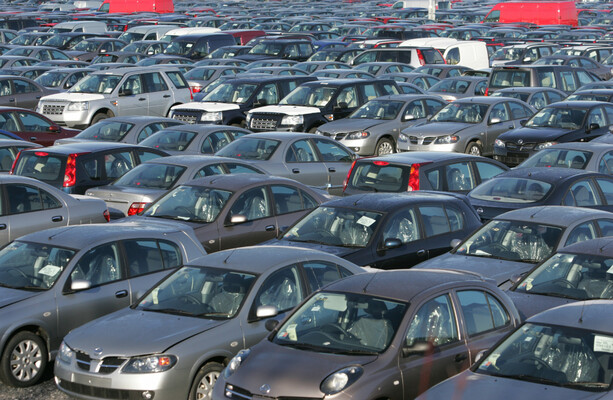
WE ALL KNOW house prices have been skyrocketing over the past 10 years and it’s harder and harder to get on to the property ladder. But what about new cars?
I took a trip down memory lane during the week to explore what we were paying for cars in Ireland just 10 years ago. The Society of the Irish Motor Industry New Car Price List from 2015, as well as the super-useful Wayback Machine, makes for compelling reading in the context of new car prices today.
Let’s take a look at the biggest-selling new car in Ireland today, the Hyundai Tucson, which has a starting price of €40,645. Back in 2015 there was no Tucson, but there was the ix35 and that had a starting price of €25,495 – an almost 60% increase.
Back in 2015 the Nissan Qashqai was a huge seller in Ireland, with a starting price of €24,695 for the 1.2-litre petrol and it was one of the most coveted family crossovers in the country. Roll on 10 years and it costs €39,990 for the cheapest one. That makes it 62% more expensive. It is also much wider, taller, longer and has a much bigger boot, as well as an arsenal of better safety features.
Another hugely popular model is the Škoda Octavia. In 2015, the starting price for the entry 1.2-litre petrol was €18,995. Today, the cheapest Octavia is €33,070 — a rise of 74%. These aren’t like-for-like cars in terms of engine, equipment or safety, but for a loyal Octavia buyer the headline jump in the basic price is still striking.
Back in 2015, you could get the very top-spec L&K 2.0-litre TDI 150hp model for €34,510, not much more than the entry model today – which is a 1.5-litre TSI petrol. The older diesel is far quicker and more luxurious, but the new car is safer, cleaner and far more advanced in terms of technology. The fact that these two cars cost effectively the same shows just how far the market has moved.
And spare a thought, if you can muster it, for the executive driver. Having climbed the corporate ladder in 2015 and managed to scrape into the 518d – the entry point to the 5 Series range – for €44,830, today the price is quite different. In 2025, BMW lists the entry price of the 5 Series range as €73,436 – just over a 60% increase in the starting price. The 2015 car had 150hp compared to 208hp in the car today, a pretty big difference in power, and the new one, for those who care, gets to 100km/h around two seconds faster.
The same is true for its fellow German rival, the Audi A6. Back in 2015 you could get into a 2.0-litre TDI 150hp A6 for €44,750. Today the cheapest Audi A6 is €66,290. At least the Audi has 54hp more, and is 2.9 seconds faster to 100km/h. But do these numbers really matter to someone who just wants to get into an A6 at all?
At the very low end of the scale, if you wanted a really cheap new car in 2015, you had the option of a sub-€10,000 car in the shape of the plucky little Fiat Panda. At €9,995 it had a 1.1-litre petrol engine, four seats and a steering wheel. A SEAT Mii would cost you €10,145 and Volkswagen’s equivalent – the up! – started at just €11,495.
In 2025, the influx of new small EVs has actually been good news for the new-car buyer wanting a bargain. The cheapest new car in Ireland is the Dacia Spring, at just €15,990. While a very simple car, it seems like a NASA spaceship compared to the old Panda, with its electric drivetrain. But it is still around 60% more expensive than the Panda was – a big jump for anyone on a tight budget.
What about incomes?
Wages have risen in Ireland over the past decade, but nowhere near as fast as new-car prices. In 2015, average weekly earnings were in the region of €700-€750 depending on the sector, while by 2025 they had passed €1,000 a week for the first time, according to the CSO. That represents wage growth of roughly 30-40% over ten years — a healthy increase on paper, but still far behind the 50-80% rise seen in the prices of many mainstream new cars over the same period. In simple terms, the typical Irish worker is earning more than they were in 2015, but new cars have sprinted away much faster, making them noticeably less affordable relative to income than they were a decade ago.
And it’s not just cars that have raced ahead. Almost every major household cost has increased sharply: house prices are up dramatically since 2015, rents have climbed year after year, and everyday essentials such as groceries, energy, insurance and childcare have all become significantly more expensive. Even if wages have risen, they’re being pulled in several directions at once — which leaves far less headroom for big-ticket purchases like a new car.
But what about inflation?
Inflation explains only a small portion of the jump in new-car prices. General inflation over the decade runs at around 25%, but many mainstream models are 50–80% more expensive than they were in 2015. The real drivers are safety regulations, emissions rules, technology creep and the fact that most cars have simply become bigger, more powerful and far better equipped.
As of late 2025, benchmark hot-rolled coil (HRC) steel – a core material in vehicle bodies and chassis – trades at roughly $830-852 per tonne. Back in 2015 it was around $360 per ton. A typical family car still contains close to a tonne of steel, so when the price of steel jumps, it feeds straight through into the cost of building every single car.
There is also VRT – the dreaded Vehicle Registration Tax. Items that once would have been expensive optional extras are now fitted as standard and that has triggered increases in taxation. You can now expect items like digital instrument clusters, wireless smartphone integration and radar-guided cruise control on many models that would have had none of that in 2015.
Safety and emissions regulations have loaded every new model with stronger crash structures, more airbags and complex exhaust after-treatment systems, with EU impact assessments putting the direct cost of some new standards at a few hundred euro per car. At the same time, the amount of electronics in a typical vehicle has exploded: PwC estimates the semiconductor content per car has almost doubled since 2019 and is set to roughly triple by 2030. Add in higher raw-material and energy prices and the industry’s shift towards larger, heavier SUVs, and it’s easy to see why a family car that cost the guts of €20,000 in 2015 is often €30,000-€35,000 today. And have these increases affected sales? Well – no. Car sales figures for 2015 and 2025 (so far) are practically identical at just under 124,000 units.
In other words, it’s not your imagination: new cars really have sprinted away from wages and general inflation. You do get more car than ever before – safer, cleaner, more powerful and more tech-laden – but you also pay a lot more for the privilege.
Paddy Comyn is the Head of Automotive Content and Communications with DoneDeal Cars. He has been involved in the Irish Motor Industry for more than 25 years.
Note: Journal Media Ltd has shareholders in common with Done Deal Ltd