
Business
Michael Smurfit: ‘I haven’t been to Ireland for years. All the things I knew are gone’


DCM Editorial Summary: This story has been independently rewritten and summarised for DCM readers to highlight key developments relevant to the region. Original reporting by Irish Times, click this post to read the original article.
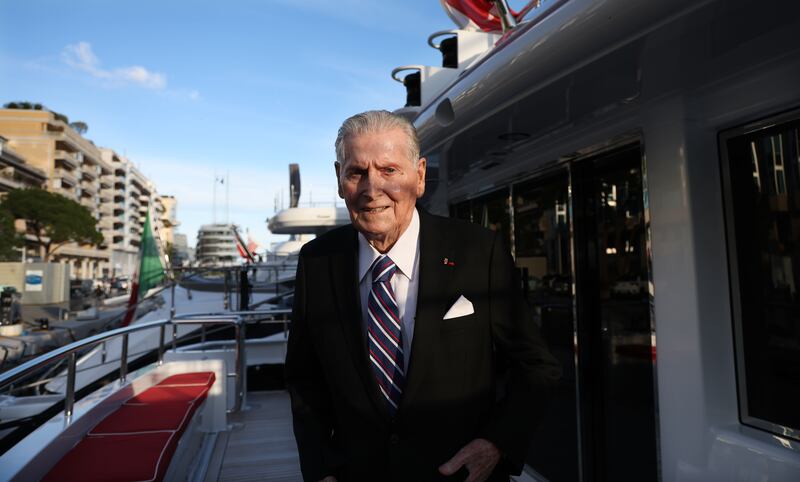
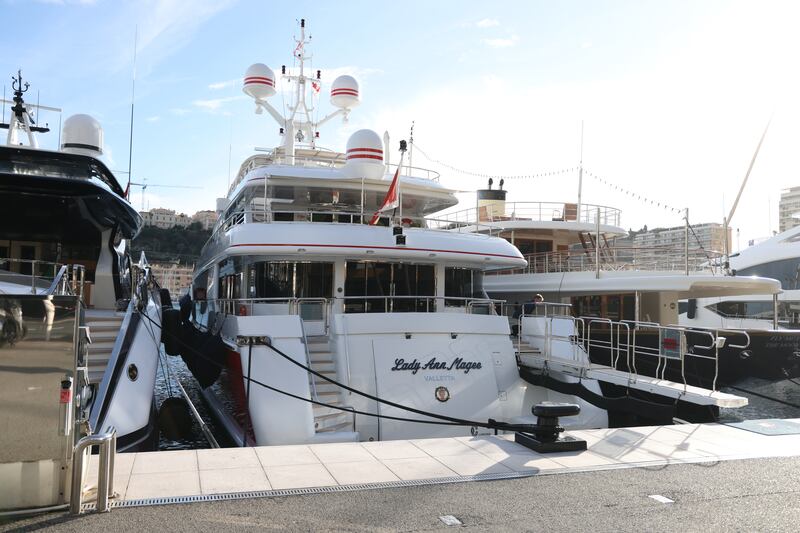
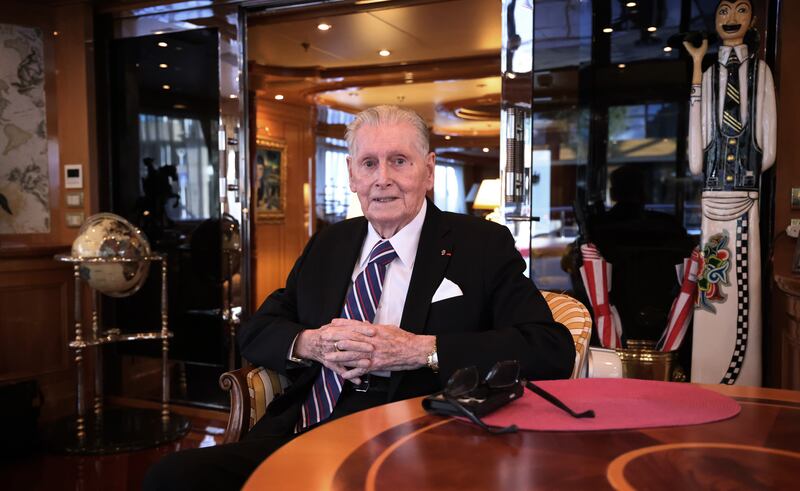
“I put on a tie for you, it’s the first time I’ve worn one in about two years,” says a smartly dressed Michael Smurfit as we sit down to chat aboard the Lady Ann Magee, a luxury yacht moored in Monaco that he calls home.
I’ve come bearing a gift: a handsome trophy for Distinguished Leadership, which he has received as part of the eighth Irish Times Business Awards, run in association with Bank of Ireland.
“I’m most grateful for this … it means a lot to me. At this age of my life it is very unexpected.”
The award is in recognition of decades of success as a businessman and entrepreneur. He is best remembered for building the Clonskeagh-based Smurfit packaging group into a major multinational enterprise. Ireland’s first.
Smurfit Westrock, as it is now known, is run by his son Tony Smurfit and is the biggest player in its industry globally.
But Smurfit snr has invested in many other businesses over the years, some of them with family connections.
“I’ve made far more money outside of Smurfits than I did in Smurfits, backing people. Denis O’Brien, for example, Dermot Desmond, John Magnier. We were all in business together and doing things together.”
How much did he make?
“Enough,” he says with a broad smile, as the yacht gently bobs in the water on the quayside near the train station in Monaco. “You’re not going to catch me on that.”
Smurfit also brought the Ryder Cup to Ireland in 2006 at the K Club, which he sold in 2020; and was a successful horse racing owner, including Vintage Crop, the Dermot Weld-trained horse that became the first European winner of the famed Melbourne Cup in Australia in 1993.
He even made a run at trying to buy The Irish Times in the 1960s. At one point, the Smurfit group had extensive publishing interests here, including Business & Finance magazine, and the Woman’s Way title.
That bid didn’t succeed and he says he later decided against buying the Independent media group, which instead was acquired by Tony O’Reilly.
Back in the day, Smurfit group was also big in supplying newsprint to publishers. The businessman tells a story of being in New York one day in the 1990s and seeing a sign for an internet cafe.
He went inside and asked what they did. “They said ‘we rent out computers’. I didn’t use a computer. So I went to one of the young kids on the computer and he said he was reading the latest news. I said ‘where are you getting the information from?’ He said ‘from the newspaper on the computer’.

“We were very big in newsprint. We were providing the Los Angeles Times with 250,000 tonnes a year for newsprint alone. I was in London a couple of weeks later and saw a sign for an internet cafe and found the same thing. So I called an emergency board meeting at Smurfit on a Friday and said ‘we’re getting out of the newsprint business. The internet is going to destroy it’.
“The board were horrified, we were making 30 per cent [profit] on sales, it was our most profitable single line of business. I said there will be no profits in 10 years. It actually took 20 years for it to happen.”
Tuberculosis
Born in Lancashire in England and educated in Ireland, Smurfit’s entrepreneurial journey famously started in Peamount sanatorium, where he was treated for tuberculosis, which he says he contracted from doing shift work in the moist atmosphere of paper mills and which at the time was a killer disease.
“I was given six months to live,” he says, adding that he started reading the Financial Times and Investors Chronicle while undergoing treatment. “I would read about takeovers and that sparked my interest in business.”
Smurfit hasn’t been involved in the running of Smurfit Westrock, the packaging company founded by his father Jefferson Smurfit in Rathmines in the 1930s, which he helped make into a world leader over many decades at the helm, since 2007 when he stepped down as chairman.
Looking back over his career, Smurfit cites the takeover of Container Corporation of America in the 1970s as his best deal. “That was the best financial deal. It moved Smurfit from the bottom of the second division [in the industry] to the bottom of the first division. And now we’re top of the first division,” he says.
Will the Smurfit name always be over the door and will the New York-listed company always be headquartered in Ireland?
“I wouldn’t want to make that bet. At the moment, we’re more an American company than a European company. Some time in the future somebody might decide to take the name down.”
Portfolio
Smurfit will be 90 in August but still has a portfolio of investments and a variety of property interests.
“I employ about 40 people personally. I’ve different properties in Spain, in Monaco and so on, which all require looking after and paying bills for water and electricity. I’ve 12 people on the boat looking after me and I’ve a full-time chef.
“It’s a great retirement. If I didn’t have the boat, I wouldn’t have known what to do with my retirement,” he says, adding that up to about two years ago he used to take it across the Atlantic.
He puts his longevity down to a strict daily routine of exercise during his working life. “The most important thing to me was my health. At 5pm, no matter what I was doing I would go for a long walk to keep fit. All my life. No matter where I was. That fitness has kept me alive.
“I’ve been very lucky. My health has held up reasonably well. My back is giving me an inability to walk and exercise now the way I used to, so I’ve had to cut back on my food and my drink.
“Other than that, the brain is working okay. All my friends are gone, I’ve one left but he’s got Alzheimer’s.
“I don’t travel very much any more. I haven’t been to Ireland for a few years. All the things I knew are gone, the K Club I sold, Shanahan’s on the Green, my favourite restaurant, is no longer open and I don’t recognise it.”
A family celebration for his milestone birthday is planned for Monaco. But with his 90th birthday just six months away, does he think about death?
“More than I like to. The next generation beneath me, they are beginning to pop off. Not many but starting to. They’re in their 70s and some of them are not in great shape.”
Legacy
In terms of his legacy, Smurfit says he’d like to be remembered for building a business with high ethics, worldwide renown and one that was the best in its industry.
“The box industry is not a very sexy business. But I just wanted to make sure that we made better brown boxes than anyone else, and we did. Along the way we became the biggest. We never set out to be the biggest, we wanted to be the best.
“But we always found ways to innovate. The upside was that it wasn’t an easy business to get into so to some extent we had it to ourselves. We made many mistakes along the way but we were the best.
“The business is now run by my son Tony, it’s nearly 100,000 people, operating in 45 countries with a turnover of $30-plus billion and Ebitda of $5 billion-plus. From small, humble beginnings in Dublin, one simple factory that my father started, my legacy is the name of the company, well known and well respected and long may that continue.”
Michael Smurfit on…
The changes he has witnessed in Ireland over the decades
“The Ireland I grew up in was totally different to the Ireland of today. It was an Ireland of emigration and poverty. I’ve seen a transformation both in politics and in business beyond my wildest imagination. Ireland is now home to many very successful companies and individuals. In my day there were probably less than a handful who were successful.”
Fellow Irish entrepreneur Tony O’Reilly
“He tried to be the master of the universe. He was running Fitzwilton, he was running Heinz and he was on the boards of a few companies. He controlled Independent Newspapers, Atlantic Resources, he had so many irons in the fire. I begged him to concentrate his efforts into a few successful ventures instead of a whole lot of ventures.”
Donald Trump
“I was the second person to buy an apartment in Trump Tower [in New York] back in the 1970s. I was on the 61st floor and he was on the 64th floor. I would have dinner with him on a regular basis. He came to some of my functions and I supported the Irish chamber of commerce in New York and he would come in to events. He was a character. Totally untrustworthy, even back then. Sold the apartment five years ago.”
On former taoiseach Charlie Haughey
“History will be kind to Charlie Haughey. He did a lot of good for Ireland. He was obviously a flawed man but we’re all flawed.”
The current state of Irish politics…
“There are too many political parties in Ireland and people are spoilt for choice and the end result is that you end up with wishy-washy politics. I haven’t seen a dominant personality in Irish politics for years. It’s all about consensus.”
Artificial intelligence
“The biggest plus is in the pharmaceutical area, the biggest negative in the manufacturing area. If it takes 10 years to develop a drug, maybe AI can do it in five years or three years. The chance to cure cancers is on the horizon. But it has a danger to it, too, if it becomes able to outthink us. That’s scary.”
Being a workaholic
“I was the original workaholic but I loved it. I worked seven days a week and every 13 weeks I’d take a break for five days. I used to send my suits to five different locations so I didn’t have to carry them with me. When the wind is behind you, go for it. I had enormous self-confidence.”

Continue Reading