


IRISHMAN BEN KAVANAGH was floating in the rooftop pool of a luxury hotel in Abu Dhabi yesterday morning when he spotted a missile streaking across the sky above, in the latest reminder of how dangerous things have become in the Gulf region amid the US-Israel war with Iran.
The conflict has widened across the Middle East, seeing cities across the United Arab Emirates (UAE) trying to fend off hundreds of missiles and drones.
An estimated 12,000 Irish citizens live in the ultra wealthy, oil-rich country, a staunch ally of the US. It’s famous for its glamorous skyscraper hotels and luxury shopping, but also for a dark underbelly of human rights abuses.
Twenty-year-old Kavanagh, from Tramore, Co Waterford, was on a short stopover with his friends at Abu Dhabi International Airport on their way to Thailand when they were plunged into uncertainty as the war broke out.
“We were getting passports checked and nearly ready to board the flight when we got turned away,” Kavanagh told The Journal.
“It’s crazy, we just kept hearing these big bangs on Saturday.”
The three friends have been put up in their hotel by their airline until airspace can reopen.
Throughout Saturday and into Sunday morning, his phone was alive with alerts warning him of the threat of missiles.
These messages, carrying a English translation of Arabic, warned recipients to “seek immediate shelter” in the closest secure building and to stay well away from windows, doors and open area.
“You get the big alert on your phone about the ‘missile threat’ – then maybe two minutes later you hear the bang and bump of an interception,” Kavanagh said.
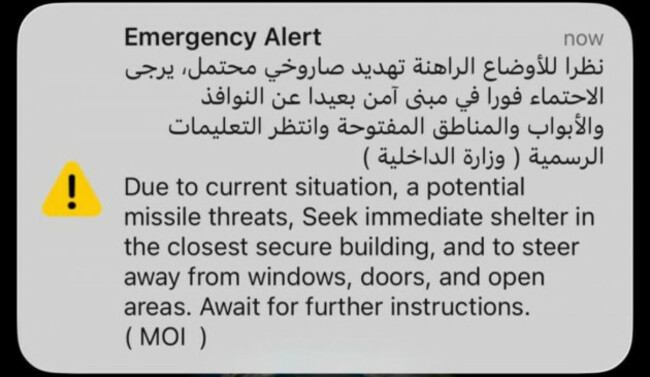
The missile threat alert received on Ben Kavanagh’s phone.
Kavanagh and his friends have registered their presence with the Irish embassy in Abu Dhabi since the war broke out but “haven’t heard anything since”, and believe the best bet is to wait for their airline Etihad to resume flights.
However, for anyone hoping the Irish government might try to retrieve them from the scene, if they wanted assistance, it’s unlikely this will happen.
“Our parents are bricking it,” Kavanagh said.
Evacuations
As reported by The Journal earlier, it’s doubtful the Irish government will carry out any evacuation given the large number of people in the region. Generally in a crisis scenario Ireland sets up a team of diplomats and specialists from the Army Ranger Wing.
UAE airspace remains closed and the only active airport at present is in nearby Oman, between four and five hours by road from Dubai.
Fianna Fáil MEP Barry Andrews has urged the Irish government to coordinate with EU countries and prepare activation of an EU mechanism designed for international evacuations.
“The situation in the region is clearly worsening and so there is no time to lose. As soon as the airports reopen, thousands of families want to see their loved ones brought home to Ireland,” the Dublin MEP said.
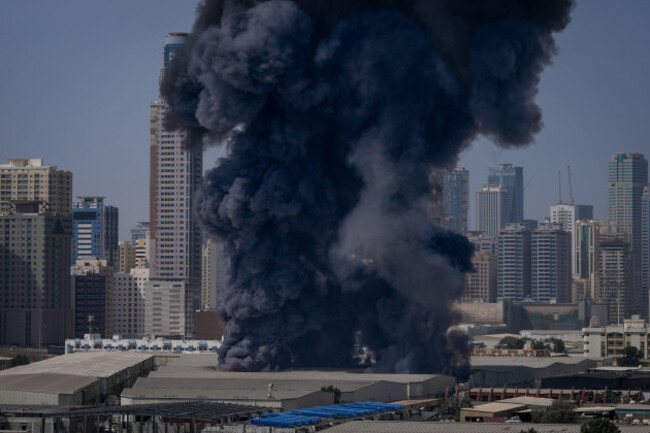
A black plume of smoke rises in Sharjah City, UAE. Alamy Stock Photo
Alamy Stock Photo
Andrews pointed to levers available to the EU to mobilise airplanes, consular assistance and evacuation support teams as part of a broader effort.
Cork woman’s ‘surreal’ holiday in Abu Dhabi
Local radio stations in Ireland today have been hearing from people stranded in the Gulf region, with Cork native Vicky explaining how her a swanky brunch in the Ritz-Carlton in Abu Dhabi turned into anything but.
A “piercing alarm” sounded on every phone in the room, ordering guests to seek immediate shelter due to a missile threat.
“It was probably the most surreal experience of my life, sitting in the Ritz-Carlton, drinking champagne, and then you’re told you can’t leave the building. You could feel the noise, the vibrations,” she told Cork station 96FM.
Dubai resident Dee Hutchinson told The Journal that the first day of the attacks was “unbelievable” for the city.
“You’re constantly looking out the window for something to happen,” she said.
“That first day or so you could hear what sounded like bombs and debris from the drones being intercepted. There were bits of activity this morning and it’s been quiet again for the day. It’s anxiety-inducing though.”
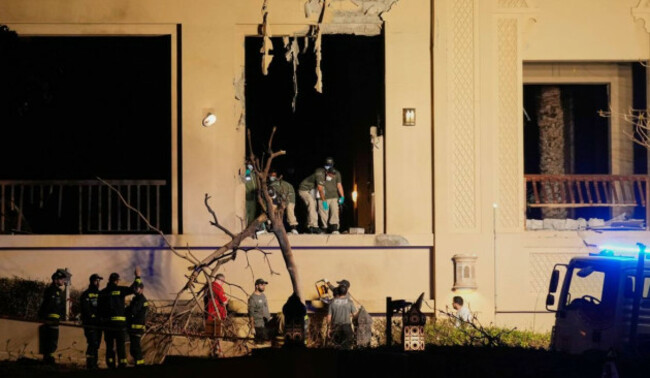
Firemen and rescue workers inspect the site of an explosion at the Fairmont Palm Hotel in Dubai Alamy Stock Photo
Alamy Stock Photo
Around 20 minutes away from Hutchinson’s apartment, the Fairmont Palm Hotel saw explosions after it was struck.
“I don’t think Dubai has ever been attacked like this before in myself or my friends’ time here,” said the corporate development advisor, who is on her second stint living in Dubai.

Dee Hutchinson and her husband Maurizio Caringi
Despite the warfare in the sky and warnings to seek shelter, Hutchinson, Hutchinson said she doesn’t “feel the need to run out of the country”, but she and her husband would consider it if the situation gets worse.
“It’s harder for our families because the news looks awful, but it depends where you are in the city,” she added.
“The government here seems to be doing a great job at defending the country and the communications have been very frequent. You know what to do and what not to do.”
Many people returned to work today in Dubai, with Hutchinson describing “flashbacks of Covid” due to the sudden mass move towards remote work for her and her colleagues.
Effects on Irish citizens elsewhere abroad
Some 2,000 kilometres away in New Delhi in India, Waterford woman Siobhan Aylward has found the effects of the war have rippled far beyond the Gulf.
As Dubai and Abu Dhabi are both hubs for international travel, many travellers use them as layovers. Aylward, her sister and her son have been stranded in New Delhi since their flight home from India was cancelled.
Prices have shot up over recent days for a return flight, with the original journey costing the three less than €2,500 combined – now it’s likely to be closer to €10,000.
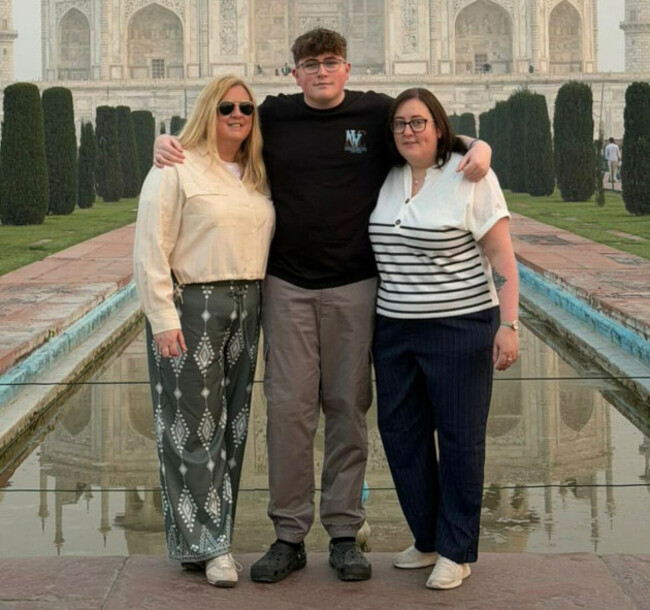
Siobhan Aylward (left), her son Josh and her sister Claire.
“It’s the uncertainty with everything, we’ll have to fork out for flights to get out of here if flights don’t return, or we fork out to stay in a hotel every night.”
She added that there has been “little reassurance” from the government on ways they might be able to get back, and she fears the family will “stuck here” until the weekend.
“I have a child back in Ireland in university who I need to get home to, I’ve a job to get back to. The anxiety is coming out of every part of my body at this point,” Aylward said.
Need more clarity and context on what is happening in the Middle East? Check out our FactCheck Knowledge Bank for essential reads and guides to finding good information online.