


ALMOST HALF OF international protection accommodation centres that are monitored by the State watchdog were overcrowded last year.
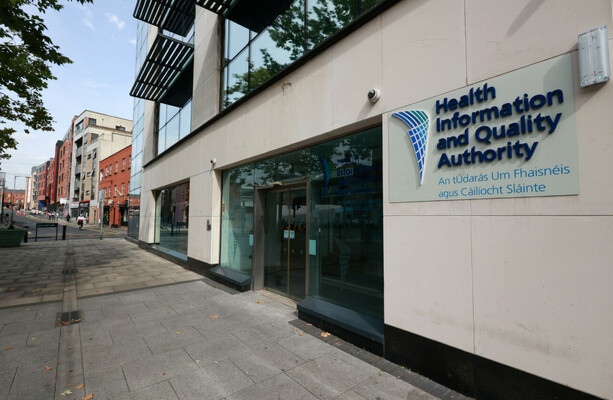
The Health Information and Quality Authority (HIQA) said that there remains a “systematic inability” to meet demand for those arriving in Ireland and those seeking to move out of the accommodation.
A total of 96 adults were “living in tented accommodation in one centre, which impacted on their quality of life”, the regulator said in its second overview report on the monitoring and inspection of International Protection Accommodation Service (IPAS) centres.
Hiqa also found that, broadly, governance issues had improved at centres, but fire safety and structural issues remained at some buildings and therefore posed a welfare problem for residents.
Overall there were 44% of centres overcrowded – a 19% increase on what was seen in 2024.
As reported previously by The Journal, this has seen stand-offs in various accommodation centres, particularly in recent months as attempts were made to free up bed space by moving more than 2,000 people out of accommodation.
Fire safety issues
In addition to the overcrowding concerns, almost a third of accommodation centres inspected by HIQA had significant health and safety concerns, including fire safety, structural issues, mould and pests.
In spite of this, Hiqa also found that the vast majority of adults and children “felt safe” in their respective accommodation.
The report found that overall standards of accommodation had improved, along with governance and oversight.
This was demonstrated by 91% of staff being garda vetted, a 26% increase since 2024.
This compares to how over a third of staff did not have correct vetting in the previous overview report.
However, there are just 30 accommodation centres currently under HIQA’s remit -meaning this report only covers around 10% of all accommodation for people seeking asylum in Ireland.
‘Urgent effort’ needs to address bed spaces
Commenting on the findings, Hiqa’s head of programme with responsibility for monitoring and inspection of IPAS centres Bronagh Gibson said that “urgent efforts” are needed to ensure the system has the capacity to meet demand.
“While there is a national strategy to provide sufficient accommodation in the longer term, interim measures must be timely, effective and responsive to risks such as deteriorating buildings,” Gibson said.
“During 2025, we saw a range of improvements in the provision of international protection accommodation services – some incremental, others significant. It is imperative that this progress continues.”
Gibson added: “While there is a national strategy to provide sufficient accommodation in the longer term, interim measures must be timely, effective and responsive to risks such as deteriorating buildings.”
Despite these challenges, Gibson noted that many residents had positive experiences of living in accommodation centres.
“Almost 90% of adults said they were happy living in their centres, and importantly 97% of children and young people told us that they felt safe living there. Their voices provide valuable insights and help us to identify what works well and what could be improved,” Gibson said.