
Environment
Ancient battlefield secrets revealed as rare Iron Age war trumpet and boar standard unearthed


Katy Prickett

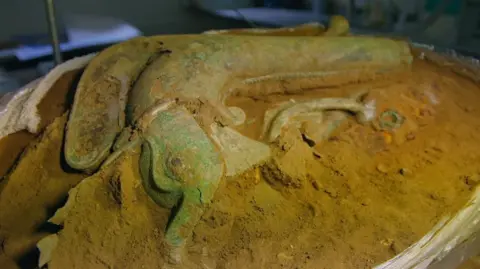 BBC/Rare TV
If you’ve ever been fascinated by ancient history, you’ll find this discovery truly remarkable. Archaeologists from Pre-Construct Archaeology discovered two of the rarest Iron Age artifacts during an excavation near Thetford, Norfolk. At the center of this find was the most complete battle trumpet, known as a carnyx, ever discovered in Europe, and the first boar’s head battle standard ever found in Britain. These instruments were used by Celtic tribes—like the Iceni, led by Queen Boudica—to intimidate enemies and rally troops during battles.
When you imagine ancient warfare, it’s incredible to think that such ornate and symbolic items played a major role. The carnyx unearthed here is made from thin, fragile metal and includes its mouthpiece, pipe, and bell—all intact after 2,000 years underground. Meanwhile, the bronze boar’s head standard would’ve been held aloft like a flag, symbolizing strength and bravery due to the ferocity associated with boars.
Experts believe this discovery, which dates to between 50 BC and AD 50, will reshape your understanding of Iron Age music and battlefield traditions. The site also revealed shield bosses and an unidentified iron object. The artifacts were preserved in a soil block and scanned before conservation started, helping researchers better understand their original positions.
As you learn about this exceptional hoard, it’s important to know that efforts are ongoing to conserve these items and determine their historical significance. The coroner will decide if the find qualifies as treasure, but regardless of the verdict, this discovery offers a rare and powerful glimpse into Norfolk’s Iron Age past.