
Culture
Ireland’s success at the Oscars, from the 1920s to now


DCM Editorial Summary: This story has been independently rewritten and summarised for DCM readers to highlight key developments relevant to the region. Original reporting by RTE, click this post to read the original article.
You’d be forgiven for thinking that it’s been the ongoing Green Wave that is solely responsible for washing Irish talent onto the shores of Hollywood – but the Irish have played an intrinsic role in the movie business since its earliest days.
This year will see several of our countrymen and women in the mix for an Oscar once again, most notably Jessie Buckley for her career-high portrayal of Agnes Hathaway in Hamnet, while Maggie Farrell also got a nod for her role in co-adapting her 2020 novel for the same film’s screenplay. John Kelly, director of the short animation Retirement Plan (which features the vocal talents of Domhnall Gleeson) will also be donning his tux for the Dolby Theatre ceremony on March 15th, while visual effects artist Richard Baneham has notched up yet another nomination for his brilliant work on Avatar: Fire and Ice, having previously won two Oscars for his work on the franchise. The teams from Element Pictures (Bugonia) and Wild Atlantic Pictures (Blue Moon) are also celebrating. Meanwhile, the ‘Justice for Paul Mescal’ campaign starts here…
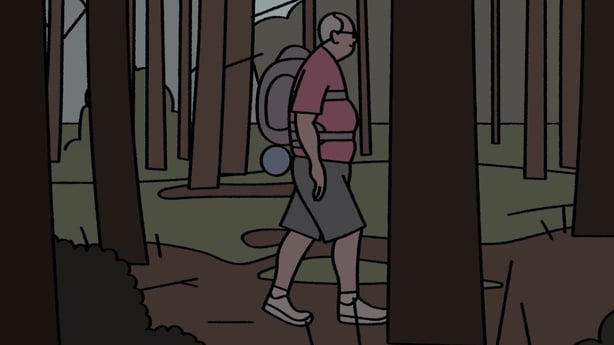
We began to see regular Irish names feature more prominently amongst Academy Awards nominees in the 1980s, with the likes of Jim Sheridan, Brenda Fricker, Neil Jordan and Daniel Day-Lewis making big impressions with their work – although famously, Fricker put little stock in the accolade, using it to prop open her bathroom door.
Even so, Ireland’s participation in the Oscars goes way, way back – as far as the very first Academy Awards in 1929, when Herbert Brenon was nominated for directing the silent film Sorrell and Son. Brenon was a naturalised US citizen, but was born in the Dublin town of Dun Laoghaire (then known as Kingstown) in 1880, going on to direct well over a hundred films during the silent movie era. The actress Geraldine Fitzgerald was also an early forerunner in that regard, earning a nomination for Best Supporting Actress in William Wyler’s 1939 adaptation of Wuthering Heights, while Dubliner Sara Allgood’s was nominated in the same category for her turn in John Ford’s How Green Was My Valley in 1941. In fact, Allgood was competing against her fellow Irish actress Patricia Collinge in the same category that year, as Collinge was nominated for her role in Wyler’s The Little Foxes.
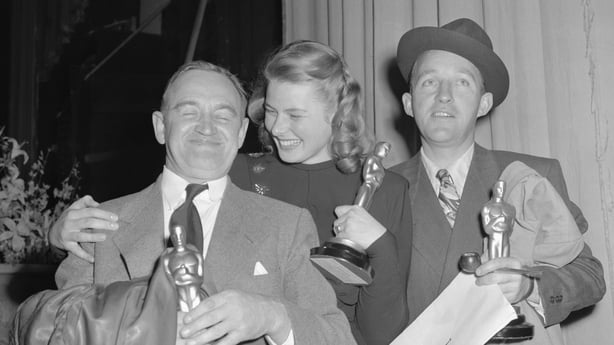
Actor Barry Fitzgerald won the Academy Award for Best Supporting Actor in 1944 for Going My Way, in which he starred alongside Bing Crosby; Fitzgerald later famously decapitated his statue while practicing his golf swing (don’t worry, the Academy replaced it.) A decade later, Wexford’s Dan O’Herlihy was nominated for Best Actor as the titular Robinson Crusoe in Luis Buñuel’s 1954 adaptation of Daniel Defoe’s enduring novel.
Let’s not forget Cedric Gibbons, the Dublin-born art director who won at the 2nd Academy Awards in 1930, for Best Art Direction on The Bridge of San Luis Rey – over his career he amassed a remarkable 11 Oscars and dozens of nominations, having also designed the iconic Oscar statuette itself.
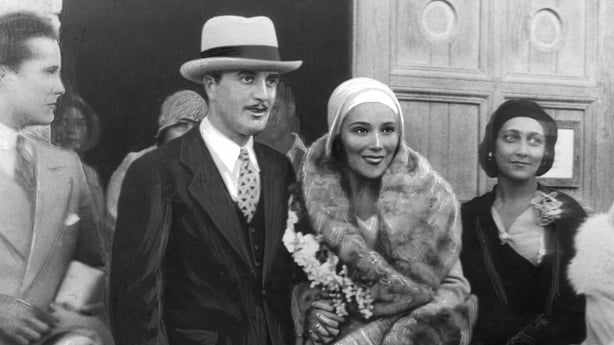
Other films that won him awards include Pride and Prejudice (1940), An American in Paris (1951), The Bad and the Beautiful (1952) and Somebody Up There Likes Me (1956). The Academy also gave him an honorary Oscar for “consistent excellence” in production design in 1950.
Of course, these days it’s not so unusual to see an Irish name amongst the nominees, and everyone from Saoirse Ronan to Cillian Murphy, Colin Farrell to Kenneth Branagh, Ruth Negga to Lenny Abrahamson and Kerry Condon to Stephen Rea have deservedly been in the mix at various points in more recent times, while Oscar-nominated films like The Banshees of Inisherin and An Cailín Ciúin have shone the spotlight on Irish film in a beautiful way.
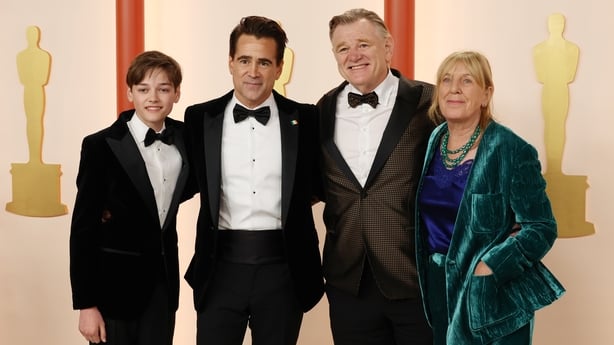
and his wife Mary at the Oscars
Still, it’s always worth celebrating the Irish artists who might not get the glitzy red carpet treatment alongside their nominations, too; names like costume designer Consolata Boyle, cinematographers Seamus Garvey and Robbie Ryan, make-up artist Michele Burke (who was nominated for many films and won an award for her work on the Francis Ford Coppola-directed Dracula in 1992) and Art Director Josie McAvin, who clocked up multiple nominations for her work on films like The Spy Who Came in from the Cold in 1965, and a win for her work on 1985’s Out of Africa.
As well as the technical and behind-the-scenes roles, the Irish have also achieved great things in animation, with Kilkenny’s Cartoon Saloon clocking up multiple nominations for their outstanding work including Song of the Sea and Wolfwalkers going toe-to-toe with the big guns in the Best Animated Feature category; Dublin’s Brown Bag Films has earned several nominations in the Best Animated Short category for the charming Give Up Yer Aul Sins and Granny O’Grimm’s Sleeping Beauty.
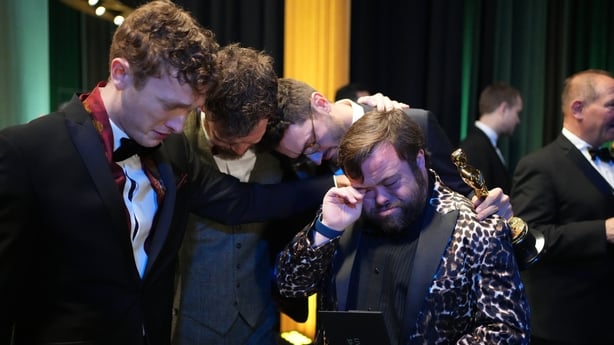
In fact, Irish filmmakers have consistently been in the mix for short films at the Oscars over the last few decades; Tom Berkeley and Ross White’s An Irish Goodbye triumphed in 2023; Benjamin Cleary’s Stutterer won the same category (Best Live Action Short Film) at the 2016 Academy Awards, father-daughter team Terry and Oorlagh George won for their film The Shore in 2012, and Martin McDonagh’s Six Shooter won at the 2005 ceremony.
We’ve historically been acknowledged in the Best Documentary Short category, too, including Patrick Carey’s Yeats Country in 1966 and the same filmmaker’s work Oisín in 1971, which showcased “the rhythms of Ireland’s natural beauty.”
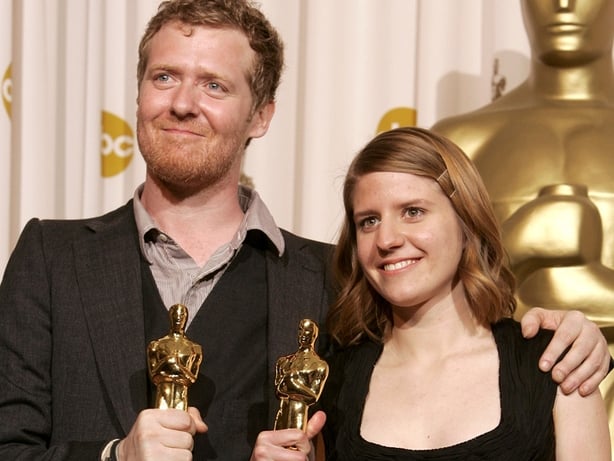
We’ve not done too badly with music, either; Once stars Glen Hansard and Marketa Irglova took home the Best Original Song Oscar for Falling Slowly in 2007, while a little-known band called U2 were nominated for The Hands That Built America from Gangs of New York in 2003. Enya earned a nod for May It Be from Lord of the Rings: The Fellowship of the Ring; Van Morrison was nominated for Down to Joy from Belfast in 2022 and even Eimear Noone, the Galway-born composer and conductor, made history in her own way by being the first woman to conduct the orchestra at the Academy Awards in 2020.
And that’s without even mentioning our screenwriters; everyone from George Bernard Shaw (Pygmalion) to Emma Donoghue (Room) have been nominated for adapting their work (Shaw won in 1939), while did you know that Alfie, the Michael Caine film, was written by a Mayoman? Bill Naughton was nominated for his screenplay adaptation of his own stage play in 1965.
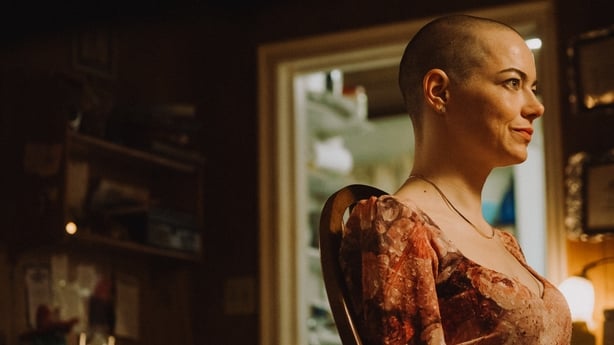
So while a nation will collectively hold its breath and cross its fingers for Jessie, Maggie, John, Richard and the Element Pictures and Wild Atlantic gangs, it’s also good to remember that no matter the outcome on March 15th, the Irish have had plenty to be proud of at the Oscars – right from the very beginning.