
Environment
UK teams up with nine European nations in bold move to power the future with offshore wind




Justin RowlattClimate Editor
 AFP via Getty Images
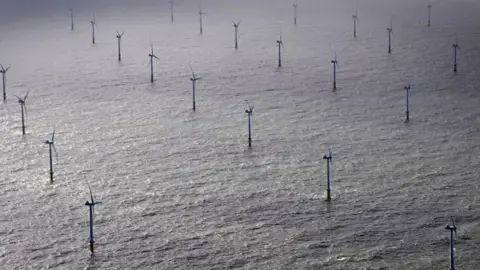
The UK, along with eight other European countries including Norway, Germany, and the Netherlands, is moving forward with a major initiative to build a new fleet of offshore wind farms in the North Sea. These projects aim to enhance energy security and reduce reliance on fossil fuels. For the first time, some of the wind farms will be linked to multiple countries through undersea interconnectors. These new connections are designed to stabilize prices and increase energy efficiency, but there are concerns that they could also lead to price increases during periods of high demand.
As you might expect, this initiative has sparked both optimism and criticism. Supporters, including RenewableUK, argue that the collaboration will lower costs for consumers and improve energy security for the region. However, critics, such as the shadow energy secretary, warn that the rapid rollout could drive energy prices up. The debate reflects a broader conversation about how quickly renewable infrastructure should be developed and at what cost.
The UK already uses ten undersea cables to connect its electricity grid to those in other European countries. According to National Grid, adding more connections between wind farms and multiple countries could lead to significant savings by reducing payments made when wind generators are asked to stop producing due to network congestion. These interconnectors have already saved UK consumers an estimated £1.6 billion since 2023, thanks in part to the ability to balance demand across different time zones.
However, not all participating countries are equally enthusiastic. Norway, for instance, has limited electricity exports during times of domestic supply concerns and has declined a new interconnector proposal with Scotland. While the overall focus remains on expanding offshore wind, security concerns over energy infrastructure, especially amid geopolitical tensions, are also a key point of discussion at the North Sea summit, attended by European countries, NATO, and the EU.
With this new agreement, North Sea nations are reaffirming their commitment to a shared goal of building 300 gigawatts of offshore wind capacity. Of this, 100GW will be jointly developed, with 20GW expected to be underway by 2030. The UK remains a leader in the sector, second only to China, and has awarded contracts for 20GW more, despite political criticism over associated costs. While some parties question the financial strategy, others support offshore wind as a vital step toward achieving net-zero emissions and creating green jobs.