
Environment
UK households set to receive £15bn boost for solar and green tech in major push to cut energy bills



 Andrew Aitchison/Getty Images
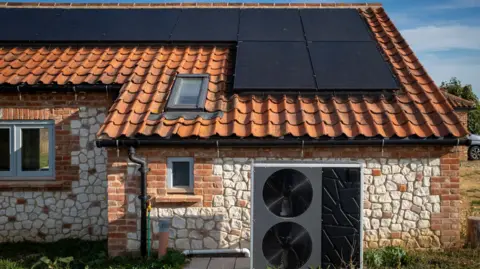
The UK government has unveiled its long-awaited Warm Homes Plan, a £15 billion initiative designed to help you install solar panels, batteries, and heat pumps in your home. The aim is to reduce your energy bills and curb the country’s carbon emissions. Over the next five years, the plan will make these green technologies more affordable through grants and low-interest or zero-interest loans. For low-income households, full funding is available, while others may need to contribute toward the cost—even with subsidies, a heat pump can cost around £5,000 after grants.
The government hopes to create a “rooftop revolution” by tripling the number of homes with solar panels and pulling one million people out of fuel poverty. If you live in a three-bedroom semi-detached home, installing these technologies together could save you between £500 to over £1,000 annually on your energy bills. Industry leaders and environmental groups have praised the plan as a positive move toward long-term savings and sustainability, while some political opponents argue it could lead to ongoing running costs for households.
As a renter, you may benefit from future reforms included in the plan. From 2030, landlords will be required to upgrade rental properties to a minimum EPC C energy efficiency rating. While the way homes are currently rated may penalize heat pump installations due to cost-based calculations, the government promises to revise the assessment criteria later this year. These changes are intended to ensure that greener homes are both energy-efficient and cost-effective.
The original plan had emphasized insulation, but due to criticism of past schemes, funding has now shifted toward newer green technologies. This focus is intended to stimulate innovation and attract private investment, with the plan projected to support up to 180,000 new jobs. However, the rollout details remain uncertain, with further consultation with the finance sector expected later this year.
By encouraging you to adopt solar energy, batteries, and heat pumps, the government hopes to reduce dependence on fossil fuels and cut household emissions. While the shift requires upfront investment, officials insist it’s the most efficient way to lower your bills in the long run. Critics argue that solar panels offer better returns than heat pumps, but both will play a role in making UK homes cleaner and more energy-efficient.