

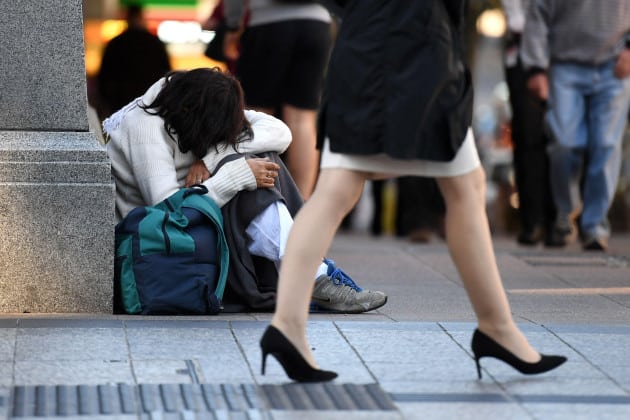
THE HOUSING CRISIS is making women more vulnerable to abuse and exploitation and they often “must make the choice to stay with an abuser or leave and navigate homelessness”.
That’s according to the National Women’s Council (NWC), which has released a report on the link between the housing crisis and violence against women.
It warned that women and children are “finding themselves trapped between the housing crisis and rising levels of homelessness and shocking levels of domestic abuse, sexual violence, exploitation and control”.
The NWC warned that housing insecurity makes women “more vulnerable to abuse and exploitation” and that domestic abuse is often the “direct cause of their homelessness”.
It also warned that the situation is “often more complex” for groups such as Traveller and Roma women, migrant women, disabled women, lone parents, older women, and members of the LGBTQI+ community.
When women do choose to leave an abuse – often with children – the NWC said they encounter a “system with severely limited availability due to high demand, capable of meeting only immediate short-term emergency accommodation needs”.
Once the immediate short-term emergency has passed, the NWC said many survivors are left with no long-term housing options and move from “one emergency shelter or accommodation to another”.
In some cases, women return to abusive relationships “simply because they have nowhere else to go”.
In Ireland, the number of women experiencing homelessness increased by more than 400% between June 2014 and June 2025.
The NWC also noted that in July of this year, women made up 40% of the national homeless figures.
The NWC has called for the government to declare a “housing emergency” and to “dramatically increase the supply of all types of housing across the country”.
It has also called for housing and homeless policies to be “survivor informed” and to “address the disconnect between homelessness, housing and Domestic Violence sectors and services”.
The NWC has also called for improved measures to “address the issue of perpetrator accountability”.
In the case of domestic violence, the NWC said there is a need to be able to remove and rehouse the perpetrator rather than the victim/ survivor.
The report is the result of a conference on the intersection between housing and different forms of violence against women which the NWC held in September.
Ivanna Youtchak, Violence Against Women Coordinator at the NWC, remarked that the report “highlights the close connection between housing and violence against women”.
“Survivors often deal with several services: housing, Gardaí, health, and child services, and social protection — yet these systems rarely talk to each other, putting more weight on survivors’ shoulders.”
She called for an “integrated approach” which would “minimise the traumatic impact on survivors and ensure that women and children don’t fall through the cracks or end up trapped in an abusive situation because they have nowhere to go”.
Youtchak also noted that the report outlines the way in which the shortage of accessible and affordable student accommodation can push migrant and female international students into overcrowded and unsafe situations – in some instances entering sex for rent arrangements.
“We urgently need sex for rent exploitation to be outlawed and the ability of victim-survivors to access legal protections,” said Youtchak.
A Bill to outlaw sex for rent arrangements is currently making its way through the Oireachtas.